Quick Answer
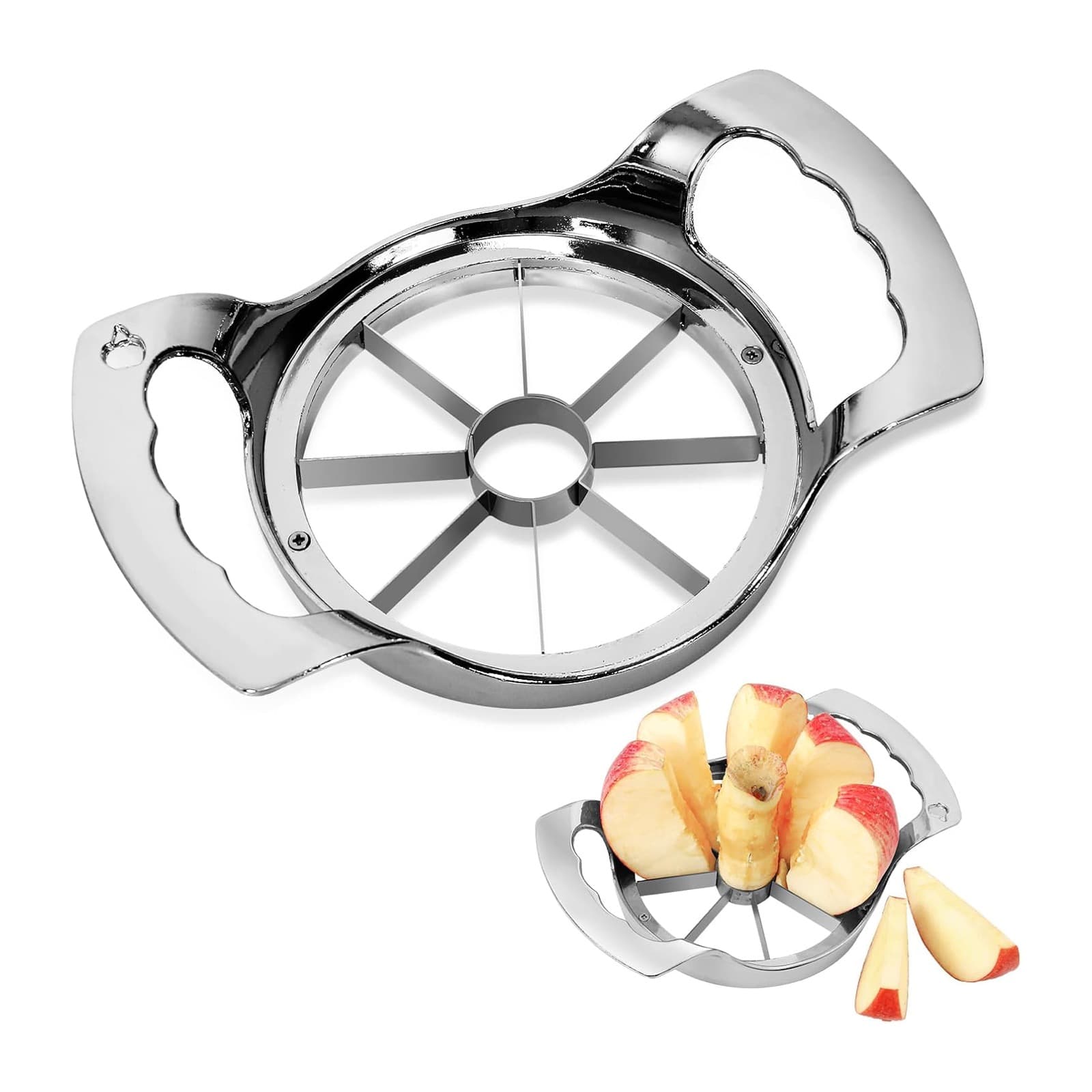
For adults preparing apples for lunch boxes, snack plates or dipping, an 8-blade apple slicer makes eight larger wedges, while a 12-blade slicer makes twelve narrower wedges from the same fruit. Choose the 8-blade Obsoorth OB-1026B when fewer substantial pieces fit the serving plan; choose the 12-blade OB-1026A when more, slimmer pieces are useful. Confirm the apple fits the exact cutting opening, center the coring ring and press on a stable board with both hands kept above the blades. Wash the apple first, clean and dry the tool after use, and refrigerate cut fruit when it is not being served promptly.
Compare the decision points
How do 8-blade and 12-blade apple slicers differ?
Blade count changes how many radial sections are cut from one apple. If the same fruit is centered in both tools, eight divisions produce fewer, wider wedges and twelve divisions produce more, narrower wedges. That is a geometry difference, not a promise that one tool will require less pressure or work with every variety and size. Firmness, ripeness, fruit diameter, alignment and the exact construction of the slicer all affect the task.
| Dimension | 8-blade OB-1026B | 12-blade OB-1026A | Best-fit scenario |
|---|---|---|---|
| Pieces per apple | 8 larger wedges | 12 narrower wedges | Choose by desired serving size and count |
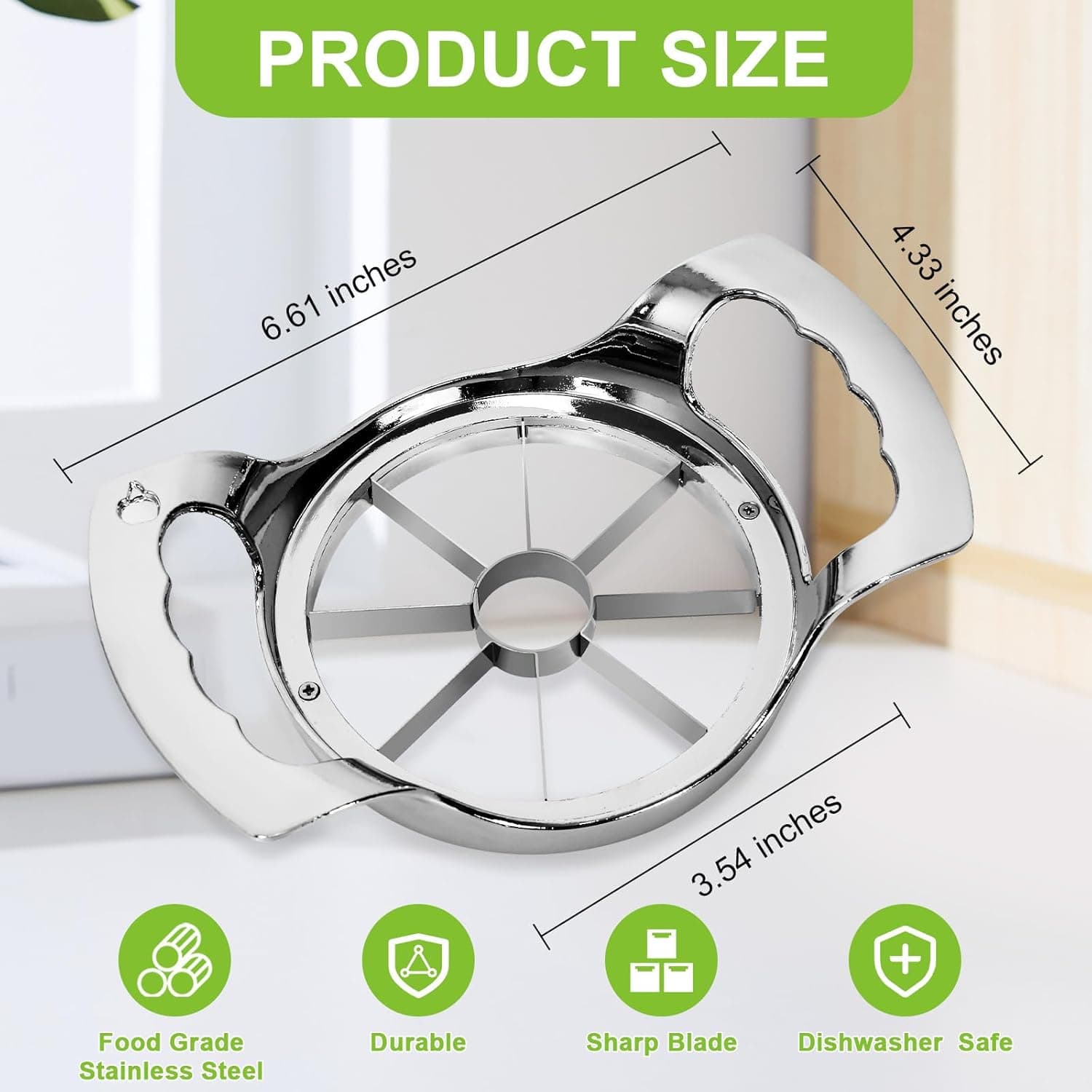
| Verified cutting opening | 3.54 inches | 4.13 inches | Measure the apple at its widest point |
| Overall size | 6.61 × 4.33 inches | 7.13 × 4.72 inches | Check drawer space and grip comfort |
| Verified materials | Stainless steel | Stainless steel blades and zinc-alloy handles | Follow the exact model's care instructions |
| Typical serving plan | Dipping, snack plates and fewer pieces | Lunch-box portions, sharing and more pieces | Use the piece count that reduces recutting |
The dimensions above come from verified catalog records for the two exact models. They should not be generalized to every 8-blade or 12-blade slicer on the market.
Choose larger wedges
When is an 8-blade apple slicer the better fit?
Choose eight blades when the goal is a simple serving of larger wedges. They are practical for apple-and-dip plates, quick snacks and situations where eight pieces already divide neatly among the people eating. Fewer pieces can also mean less rearranging on a small plate. If a recipe needs thinner apple pieces, however, the wedges may still need another cut with an appropriate knife.
The Obsoorth 8-blade apple slicer and corer is model OB-1026B, ASIN B0D5YCZ4B7. Its verified record lists eight stainless steel blades, a center coring ring, a 3.54-inch cutting opening and wide two-handed grips. Those numbers let you check the widest part of an apple before pressing rather than assuming that every large apple will fit.
Choose narrower wedges
When is a 12-blade apple slicer the better fit?
Choose twelve blades when more individual pieces make serving easier. Narrower wedges can fit lunch-box compartments, shared snack boards or recipes that begin with smaller sections. The result is still a wedge, not a thin baking slice; check the recipe before deciding that twelve sections eliminate all further cutting.
The 12-blade apple slicer and corer is model OB-1026A, ASIN B0CG94679C. Its verified record lists a 4.13-inch opening, twelve stainless steel blades and zinc-alloy handles. A wider listed opening may accept some apples that do not fit OB-1026B, but fruit still needs to sit inside the ring without forcing. For the full pressing technique, use the existing step-by-step apple slicer guide.
Use either model carefully
How should you prepare apples for snack time?
Step 1
Wash hands, the apple and the work surface
The FDA advises washing hands before produce preparation, rinsing produce under running water and using clean utensils and surfaces. Do not use soap or household detergent on the apple.
Step 2
Inspect the fruit and measure its widest point
Cut away damaged or bruised areas. Compare the fruit with the exact slicer opening; do not force an oversized, unusually hard or unstable apple through the blades.
Step 3
Center the core on a stable cutting board
Set the apple upright on a flat, slip-resistant board. Align the circular coring ring over the core so the wedges are more consistent and firm core material is less likely to remain attached.
Step 4
Press both handles evenly
Keep fingers above the blade assembly and apply balanced downward pressure with both hands. Stop if the apple shifts, the tool twists or the required force feels uncontrolled.
Step 5
Serve or store the wedges appropriately
Move wedges by their peel edges without reaching between blades. If they will not be served promptly, place the cut fruit in a covered container or sealed bag in the refrigerator, following extension food-storage guidance.
Keep children away from the cutting step
Both products contain exposed cutting edges. An adult should choose, align, press, clean and store the slicer. Serving apple wedges to a child does not make the cutting tool suitable for the child to operate; follow age-appropriate food preparation and supervision practices in your household.
Care and maintenance
How do you clean and store an apple slicer?
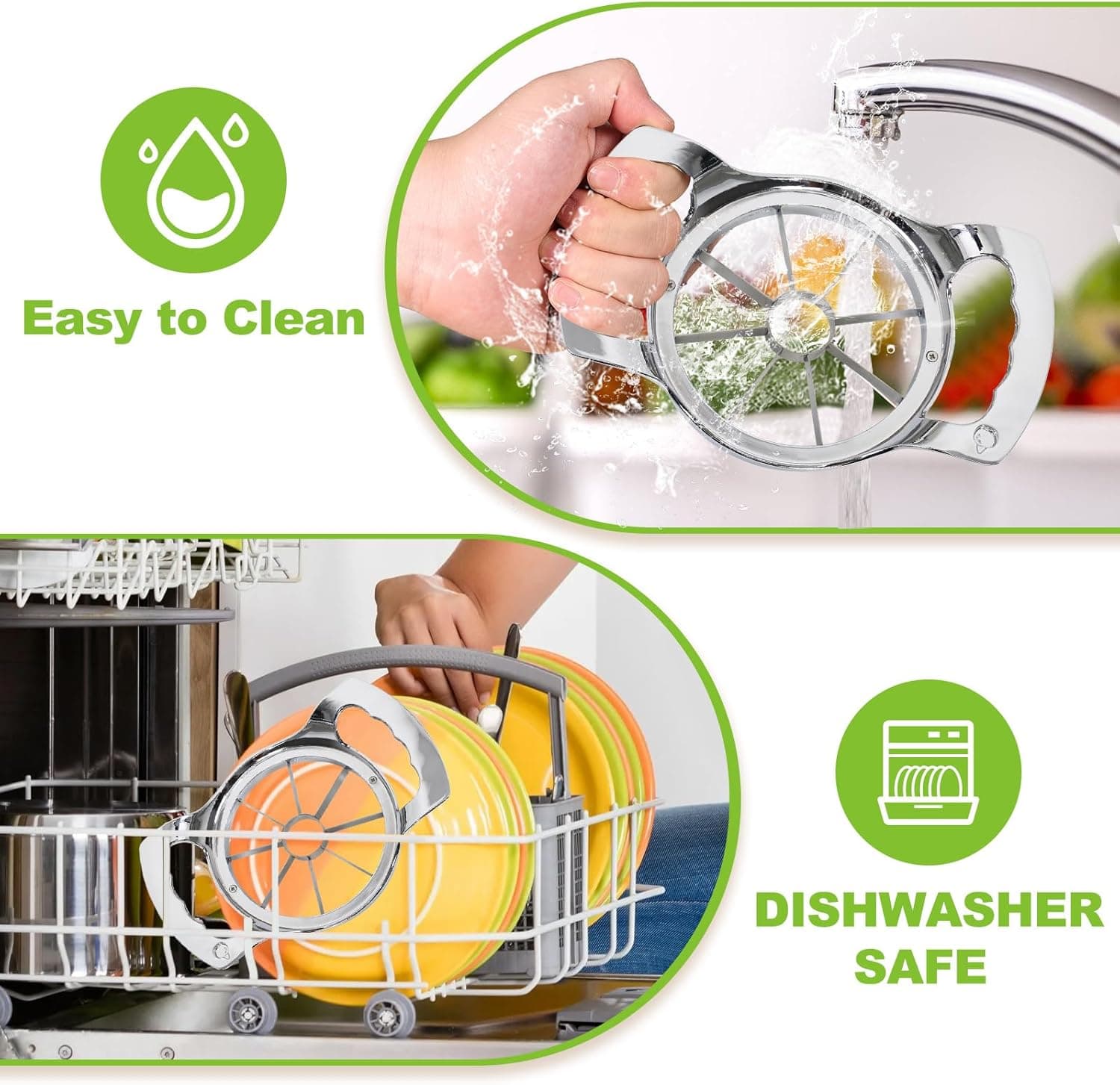
Remove trapped fruit soon after use, holding the tool by its handles and keeping fingers out of the blade openings. Both exact Verified product records identify both slicers as dishwasher safe, but the supplied care instructions for the model you own should control rack placement and cleaning method. Do not wipe sharp edges with a loose cloth or reach through the blade ring to dislodge fruit.
Let the slicer dry fully, then inspect the blade ring, joints and handles before storage. Stop using it if a blade is bent, loose or damaged. Store the dry tool in a fixed location where no one will contact the cutting edges while reaching into a crowded drawer.
Choose the exact model
Compare verified dimensions before you buy
Start with the apple sizes you normally purchase and the serving style you want. Review OB-1026B for eight larger wedges or OB-1026A for twelve narrower wedges, then compare the verified opening, overall dimensions and materials. Browse the Food Preparation collection for related tools; current availability belongs to the exact Amazon listing rather than this guide.
Frequently asked questions
Apple slicer blade counts, answered
Is an 8-blade or 12-blade apple slicer better?
Neither blade count is universally better. Choose an 8-blade slicer for eight larger wedges and a 12-blade slicer for twelve narrower wedges, then confirm that the apple fits the exact tool opening.
What is the main difference between 8-blade and 12-blade apple slicers?
The main difference is the number and relative width of the wedges produced from the same apple. More radial divisions create more, narrower pieces; fruit size, blade opening and handle design also matter when comparing specific models.
Which apple slicer is better for lunch boxes and snack plates?
An 8-blade slicer suits people who want fewer, more substantial wedges for dipping or a simple snack plate. A 12-blade slicer suits people who prefer more individual pieces or narrower wedges, provided the fruit fits and the adult preparing it can press safely.
Do both apple slicer models remove the core?
Yes. Both verified models combine radial blades with a center coring ring, but the ring must be aligned over the apple core before pressing. An off-center cut can leave firm core material on a wedge.
What size apple fits the 8-blade slicer?
Model OB-1026B has a verified 3.54-inch cutting opening. Measure the apple at its widest point and do not force fruit that does not sit comfortably inside the blade ring.
How should I clean and store an apple slicer?
Remove fruit pieces without putting fingers between the blades, then follow the exact product care instructions. The two verified listings identify the slicers as dishwasher safe; dry the tool fully and store it where the cutting edges cannot be contacted accidentally.
How do I keep cut apple wedges from browning?
Browning begins when cut apple flesh is exposed to oxygen. Penn State Extension identifies ascorbic acid as an effective treatment for limiting this color change; use a tested method when appearance matters, and refrigerate peeled or cut produce rather than leaving it on the counter for extended periods.
Sources and review method
Check the guidance behind this comparison
Product dimensions, materials, blade counts, models and ASINs come from verified catalog records, matching product images and the exact Amazon listings checked on Sep 22, 2026. Produce washing, cold-storage and browning guidance was checked against the following sources on the same date.
1. U.S. FDA: Selecting and Serving Produce Safely
Federal guidance for washing produce under running water, using clean hands and utensils, and separating produce from raw animal foods.
2. Penn State Extension: Proper Care and Handling of Fruits and Vegetables
University food-safety guidance to refrigerate fresh produce within two hours of peeling or cutting and to keep work surfaces clean.
3. Penn State Extension: Preserving Color and Preventing Browning of Foods
University guidance explaining enzymatic browning and the use of ascorbic acid to limit darkening in fresh-cut fruit.
4. Penn State Extension: Let's Preserve—Apples
Apple-specific preparation guidance covering clean surfaces, washing under running water, firm fruit selection and browning control.
About the author
Obsoorth Editorial Team
The editorial team prepares product-use guidance from verified catalog records, matching product assets, exact marketplace pages and cited external references. The team distinguishes model-specific facts from general food-preparation guidance and removes unsupported performance, health and safety claims.