Quick Answer
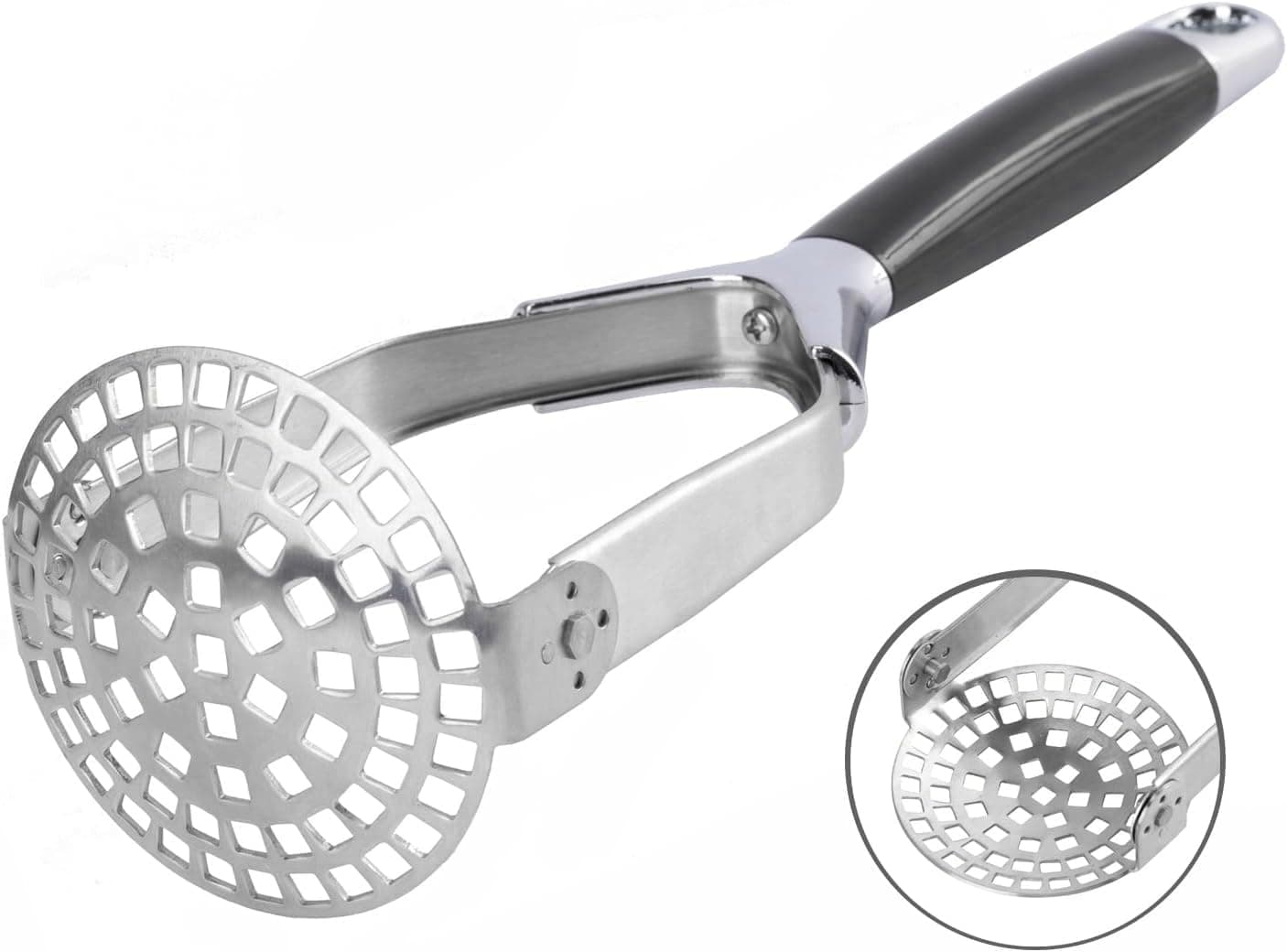
To use a potato masher for smoother mashed potatoes, home cooks should begin with evenly sized pieces cooked until tender, then drain them thoroughly and mash while warm. Open the Obsoorth KJ-1033 pressing head, stabilize a suitable pot or bowl and make short vertical presses in overlapping sections instead of stirring aggressively. Add butter, milk or seasoning as your recipe directs, then stop once the texture suits the dish. Clean food from both sides of the perforated plate, dry the joints and fold the head only for storage.
Before cooking
Choose a potato and container that fit hand mashing
Potato variety affects the starting texture. Penn State Extension describes russets as dry and mealy and well suited to mashing, while round white and red-skinned potatoes are moister. Choose the potato called for by a tested recipe and decide whether you want a fluffy, creamy or deliberately rustic finish before pressing.
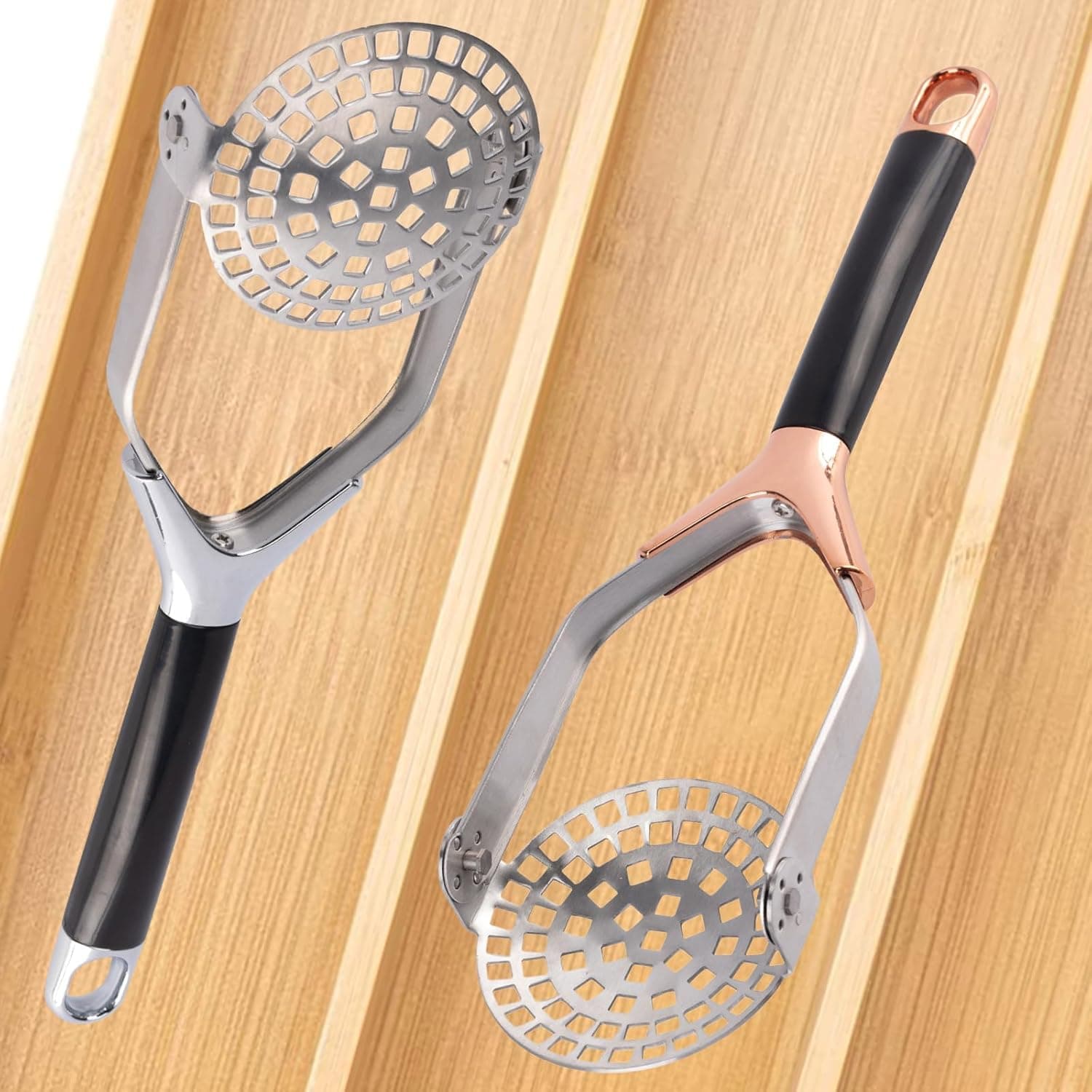
The KJ-1033 is a 12-inch tool with a 5.5-inch handle, stainless steel body, perforated pressing plate and foldable head. It is designed for potatoes and other soft foods. Use a deep, stable pot or heat-safe bowl with enough room to lift and reposition the plate. Because the verified record does not promise nonstick compatibility, do not scrape a coated pot with the metal plate.
Use this method when
- You want direct control over a rustic-to-even hand-mashed texture.
- The cooked potatoes are soft enough to pierce and press.
- You have a stable vessel that will not be damaged by a metal utensil.
- You want a tool that folds flatter or hangs between uses.
Choose another method when
The food is hard, raw or frozen; the cookware maker excludes metal utensils; the masher head will not stay steady; or your recipe requires a precisely pureed texture rather than hand mashing.
Prepare first
Cook the potatoes until the masher can do its job
A masher should shape already cooked food, not force hard pieces to soften. Wash hands, clean the work surface and scrub the potatoes under cold running water. Cut pieces to a similar size and use a tested recipe to select the amount of water, simmer level and cooking time. Check several pieces; they should be easy to pierce and soft enough to press without excessive force.
Drain the cooking water carefully. Briefly letting the potatoes steam in the hot pan is a Utah State University kitchen tip for removing surface moisture before mashing. Keep the pot stable and leave enough headroom for the plate to lift without throwing pieces or hot liquid over the rim.
Step-by-step
Follow seven steps to mash potatoes by hand
Step 1
Inspect and fully open the mashing head
Start with a clean, dry masher. Open the KJ-1033 pressing head and confirm that the plate and side arms stay steady under light pressure. Keep fingers away from the moving joints. If the head shifts, the arms look bent or a joint is damaged, stop using the tool.
Step 2
Cook evenly sized potato pieces until tender
Scrub the potatoes under running water, peel them if the recipe calls for it and cut similar-size pieces. Follow a tested recipe for the variety and cooking method. Utah State University's mashed-potato directions cook pieces until easy to smash; Penn State's colcannon recipe calls for fork-tender potatoes.
Step 3
Drain the potatoes and remove excess surface moisture
Drain carefully in a colander and keep hands away from steam. Return the potatoes to a stable pot or deep, heat-safe bowl. Utah State University recommends letting drained potatoes steam briefly in the hot pan so excess moisture can escape. Do not mash while cooking water remains pooled at the bottom.
Step 4
Stabilize the pot and begin with short vertical presses
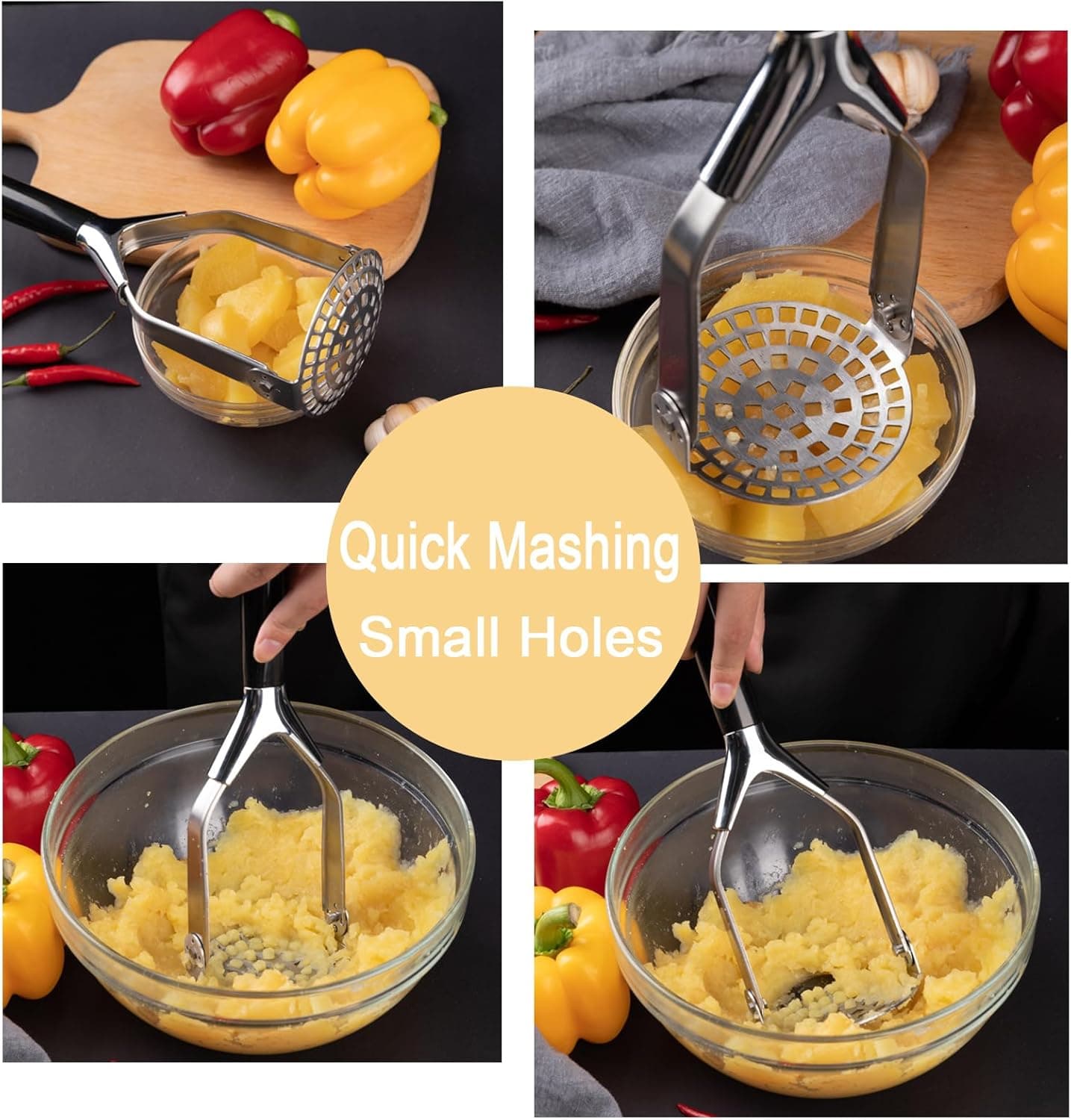
Place the pot on a dry, heat-resistant surface and steady a hot handle with an oven mitt. Set the perforated plate flat on several pieces and press straight down. Lift before moving to the next area. Short vertical passes give more control than stirring or levering the plate against the pot wall.
Step 5
Work across the pot in overlapping sections
Move across the pot so each area receives similar attention. Bring larger edge pieces toward the center with a heat-safe spoon or spatula. Pause after one full pass and inspect the texture. Repeat only where visible pieces remain, stopping earlier for a rustic finish or later for a more even mash.
Step 6
Add recipe ingredients and stop at the texture you want
Add butter, milk, cream or seasoning in the order and amount specified by your recipe. The Utah State University recipe adds butter, milk, salt and pepper after draining, then mashes until relatively smooth. Fold gently and stop when the texture suits the dish; results vary with the potato and recipe.
Step 7
Serve, clean the plate and fold it only when dry
Serve the potatoes or handle leftovers according to current food-safety guidance. Rinse both sides of the plate before residue dries, then wash the plate, arms, joints and handle using the care method supplied with the tool. Dry every surface and fold the head only when clean and dry.
Texture control
How can you make hand-mashed potatoes more even?
Fix uneven cooking instead of adding pressure. If one piece collapses but another resists the plate, pause and check whether the firmer pieces need more cooking. Forcing a masher through hard centers can move the vessel and strain the folding head. Consistently tender pieces are the basis of a more even result.
Use a repeatable pattern instead of random pressing
Divide the pot into sections. Press each once, pull missed pieces inward and inspect the batch before another pass. Keep the plate close to level so it meets several pieces, and lift it clear before moving sideways.
Match the stopping point to the meal
A hand masher can leave texture or create a more even mash. For a rustic side, stop when the largest pieces are gone; for a more uniform result, make another light pass after adding the recipe's warm ingredients. The KJ-1033 is a manual masher for potatoes and other soft foods, not a ricer, mixer or puree tool.
Troubleshooting
Avoid five common hand-mashing mistakes
Pressing potatoes before they are tender
Test several pieces and continue cooking if the plate needs heavy force to break them down.
Leaving water in the pot
Drain fully and let surface moisture escape so pooled cooking water does not dilute the mixture.
Mashing only in the center
Use overlapping passes and bring edge pieces inward so the whole batch receives similar attention.
Levering against the pot wall
Press vertically in a compatible vessel instead of scraping metal across a coating or using the rim as a fulcrum.
Folding the tool while food is trapped
Clean and dry the plate, arms and joints before moving the head into its compact storage position.
After the meal
Clean every opening, dry the joints and store the head folded
Scrape remaining food into the serving dish or an appropriate storage container, then rinse the masher before potato residue dries inside the small openings. Wash both sides of the plate, the side arms, moving joints and handle with soap or detergent and water, following any care instructions included with the exact tool. The verified KJ-1033 record does not claim dishwasher safety, so hand washing is the conservative method.
Dry the perforations and joints before folding. Store the masher flat where heavier utensils will not bend the plate, or use the hanging loop in a clean, dry location. USDA guidance says refrigerated leftovers can generally be kept for three to four days; refrigerate mashed-potato leftovers promptly and label the container.
Product match
Review the exact KJ-1033 masher before choosing
The Obsoorth foldable stainless steel potato masher is model KJ-1033, with a stainless steel body, plastic handle, perforated pressing plate, hanging loop and foldable head. Compare its verified 12-inch overall length and 5.5-inch handle with your storage and cookware. You can also browse the Food Preparation collection or read the Small Kitchen Upgrades guide for related kitchen-planning ideas.
Frequently asked questions
Using a hand potato masher, answered
How do you use a potato masher for smoother mashed potatoes?
Cook evenly sized potato pieces until they are easy to pierce, drain them well and press while they are still warm. Use short vertical strokes in overlapping sections, then add ingredients according to your recipe and stop when the texture is even enough for your dish.
Should you mash potatoes while they are hot or cold?
Mash them after cooking and draining, while they are still warm enough to press easily. Work carefully around the hot pot and steam, and stabilize the pot before applying downward pressure.
Why do some pieces stay lumpy when I use a hand masher?
The pieces may be different sizes, not fully tender or missed around the edge of the pot. Cut them evenly, cook until easily pierced and work across the pot in a deliberate pattern rather than pressing only in the center.
Can the KJ-1033 potato masher be used in a nonstick pot?
The KJ-1033 has a stainless steel pressing plate, and the verified record does not claim compatibility with nonstick coatings. To avoid scraping a coating, transfer the cooked potatoes to a suitable heat-safe bowl or follow the cookware manufacturer's utensil guidance.
Can this potato masher handle foods other than potatoes?
The verified KJ-1033 record says it is designed for potatoes and other soft foods. Use it only with food that is already soft enough to press, and do not infer suitability for hard, frozen or raw ingredients that the product record does not confirm.
Is the KJ-1033 foldable potato masher dishwasher safe?
The current verified product record does not state that it is dishwasher safe. Wash it by hand unless the packaging or instructions supplied with your exact masher explicitly provide a dishwasher method.
What are the model, materials and size of this potato masher?
The silver Obsoorth masher is model KJ-1033, with a stainless steel body and plastic handle. It is listed as 12 inches long overall with a 5.5-inch handle, and its verified Amazon ASIN is B0BRN5NFD3.
Sources and review method
Check the guidance behind this article
Product facts come from the verified KJ-1033 catalog record and matching images. Potato preparation, mashing and leftover guidance was checked against these sources on Sep 6, 2026.
1. Penn State Extension: Potatoes in the Garden and the Kitchen
University guidance on cleaning potatoes, choosing varieties for mashing and cooking until fork-tender before using a fork or potato masher.
2. Utah State University Extension: Mashed Potatoes
A university extension recipe that cooks potato pieces until easy to smash, drains them and adds butter, milk and seasoning before mashing.
3. Utah State University Extension: Quick Kitchen Tips
University kitchen guidance on letting drained potatoes steam briefly in the hot pan before mashing.
4. USDA FSIS: How Long Can You Keep Leftovers in the Refrigerator?
Current federal guidance stating that refrigerated leftovers can generally be kept for three to four days.
About the author
Obsoorth Editorial Team
The editorial team prepares product-use guidance from verified catalog records, matching product assets and cited external references. The team removes unsupported specifications and separates general cooking guidance from claims about a specific model.