Quick Answer
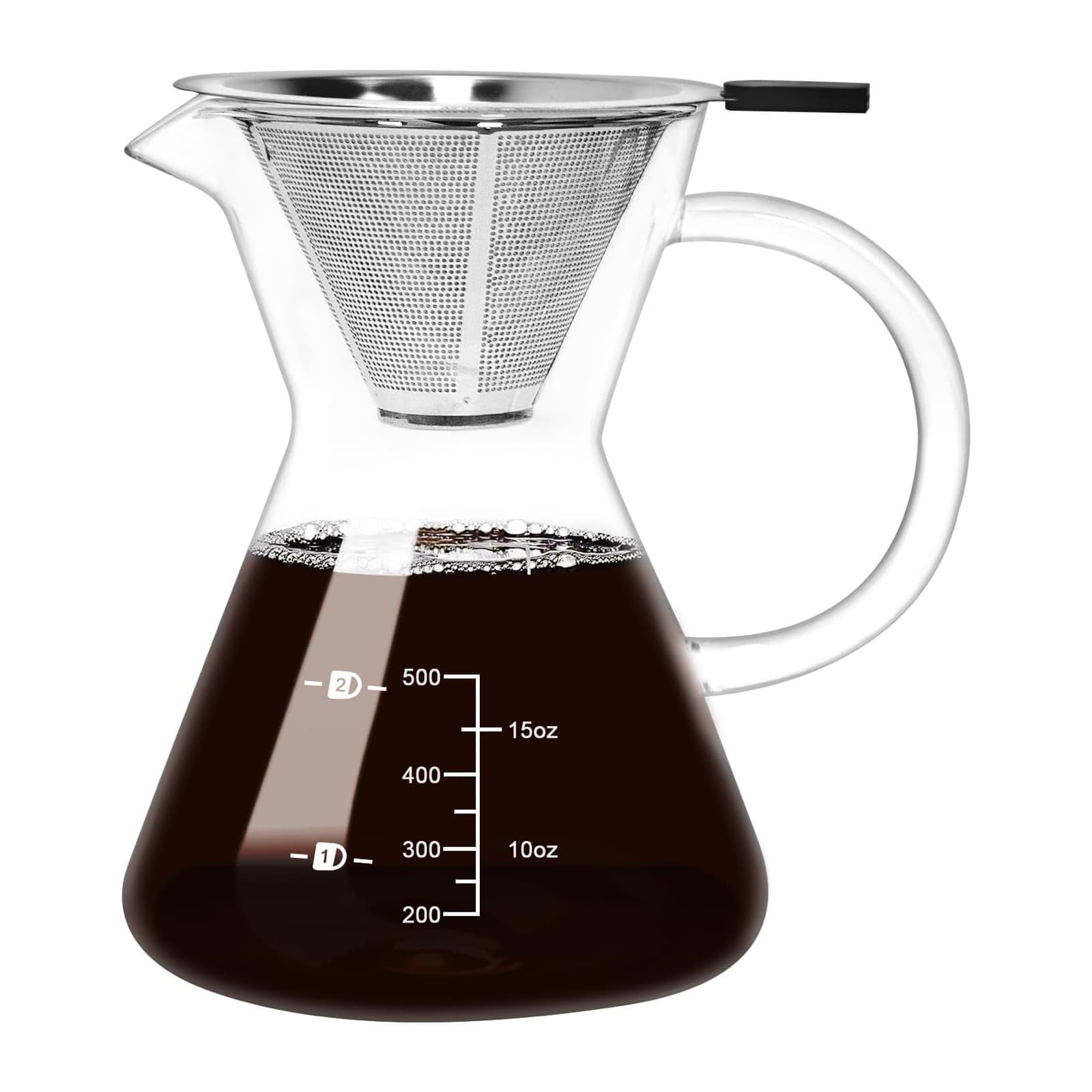
For home coffee drinkers choosing a morning pour-over setup, paper vs metal coffee filters is mainly a choice about cup texture, filter fit and cleanup. Paper generally holds back more oils and sediment, while metal mesh generally lets more through. The Obsoorth OB-40005 provides a paper-free option with a reusable double-layer 304 stainless steel filter and a 17 oz / 500 ml glass carafe. Choose it when you want that reusable-filter routine and can wash the mesh after each brew; choose a compatible paper-filter brewer when a cleaner-textured cup matters more to you.
What changes when you choose paper instead of metal?
The filter separates grounds from the drink, but different filter systems do not necessarily make the same cup. The National Coffee Association describes differences in how paper and metal retain coffee oils and sediment. Think of texture as a preference to evaluate, not a score that makes one material automatically superior.
A person who dislikes particles at the bottom of a mug may prefer paper. Someone who enjoys a fuller-feeling cup and wants to keep using the same filter may prefer metal. Neither choice guarantees sweetness, good extraction or a particular caffeine level; coffee and brewing decisions still matter.
Hario's double-mesh dripper is another manufacturer example of fine particles passing through a reusable metal filter. That supports the general distinction, but it is not a laboratory measurement of the OB-40005. This guide does not claim a filtration percentage, particle-size rating or a tested taste advantage for this model.
Compare the filter choices against your morning routine
Use this table to decide what you value before buying equipment. The paper column describes a correctly matched paper-and-dripper system, not a paper accessory verified to fit this metal-filter brewer.
| Dimension | Paper filter | Reusable metal filter | Best-fit scenario |
|---|---|---|---|
| Cup texture | Generally retains more oils and sediment | Generally allows more oils and fine particles through | Paper for clarity; metal if you enjoy a fuller texture |
| Filter supply | Keep the correct replacement papers available | Reuse the intact filter supplied with the brewer | Metal for a routine without buying paper filters |
| After brewing | Remove the used paper and grounds; clean the brewer | Empty grounds and wash the mesh and brewer | Choose the cleanup task you will actually complete |
| Fit | Match paper shape and size to the specific dripper | Match filter seating and support to the specific brewer | Neither option is a universal insert |
| Adjustments | Follow a recipe for that paper and dripper | Start consistently, then adjust grind or pour to taste | Do not assume identical drawdown across filter systems |
For a rushed household, consider the end of the routine as carefully as the beginning. If a damp filter will sit beside the sink until evening, do not choose metal solely to avoid stocking paper. Conversely, a household willing to empty and wash mesh promptly may find a paper-free setup a practical match.
Check the exact brewer and filter fit before buying
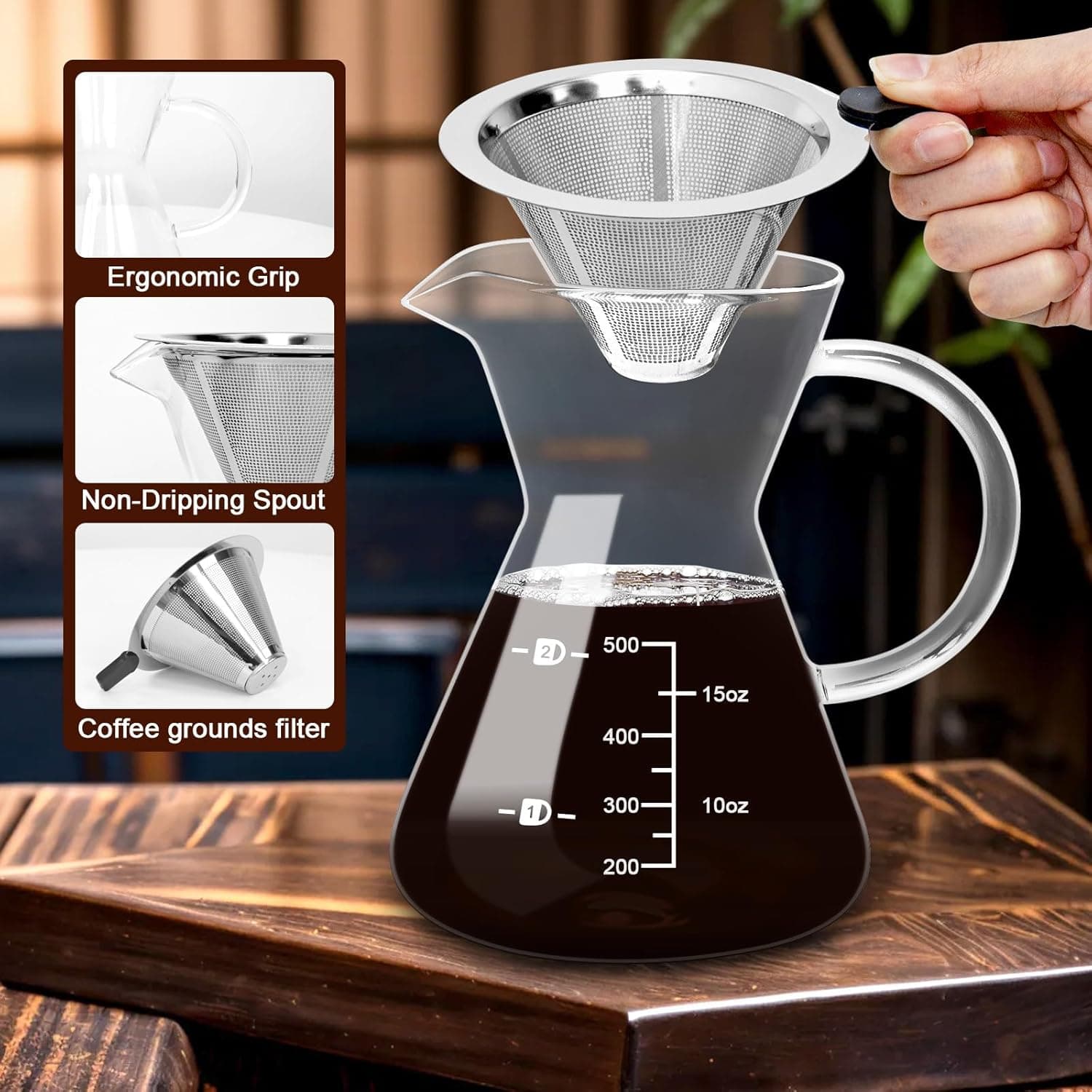
The 17 oz glass pour over coffee maker is model OB-40005, ASIN B0DQGQDYPW. Its verified catalog lists a graduated borosilicate glass carafe, reusable double-layer 304 stainless steel filter and dishwasher-safe design. Its listed overall dimensions are 4.02 inches deep, 4.8 inches wide and 6.38 inches high; compare that footprint with your counter and storage space.
Those facts identify a complete reusable-filter setup. They do not establish compatibility with an unrelated replacement filter, paper cone or another brand's carafe. Check that the supplied filter sits securely, that the glass is undamaged and that you can lift the filter without reaching across an unstable hot vessel.
For paper, read the exact dripper's instructions rather than choosing by appearance. CHEMEX's official FAQ, for example, identifies different paper formats for different brewers and explains model-specific placement. It illustrates why filter fit matters; it does not verify CHEMEX papers for OB-40005.
Try a controlled brew before committing to a routine
If you can try both systems, compare the whole experience rather than a single sip from unrelated coffees. The following checklist is a practical home comparison, not a claim that the two systems can be made identical.
1. Choose the filter system, not a loose substitute
For the OB-40005, use its supplied double-layer metal filter seated securely over the carafe. For a paper-filter comparison, use a separate dripper with the paper its instructions specify. Do not force a paper cone into the metal mesh or balance an unrelated filter above the carafe; that would change the setup you are trying to evaluate.
2. Prepare a measured batch and a stable workspace
Use clean equipment on a level, heat-resistant counter, with a kettle, scale, coffee and serving cup ready. Keep the planned batch below the carafe's listed 17 oz / 500 ml capacity, allowing practical serving space. Heat water separately; the verified glass material does not establish permission to heat this carafe on a burner.
3. Brew consistently before judging the filter
Use the same coffee and record the dose, water amount and pouring approach for each trial. Begin with the recipe appropriate to each brewer rather than insisting on identical drain times. Keep water below the filter rim, wet the coffee bed evenly and pour with control; avoid compensating for slow flow by filling higher.
4. Compare the cup and the cleanup together
Let both coffees reach a comfortable drinking temperature, then note texture, visible sediment and whether you enjoyed the cup. Also complete each cleanup before deciding: lifting used paper is a different task from rinsing a mesh filter. If you change grind or pouring for the next brew, change one variable and record it rather than replacing everything at once.
Once you choose the metal-filter setup, follow the step-by-step pour-over brewing guide for measuring, blooming and pouring. Keep selection and troubleshooting separate: dissatisfaction with one unmeasured brew is not enough to conclude that the filter material is wrong for you.
Avoid mistakes that make either filter choice disappointing
Do not confuse sediment with a damaged filter
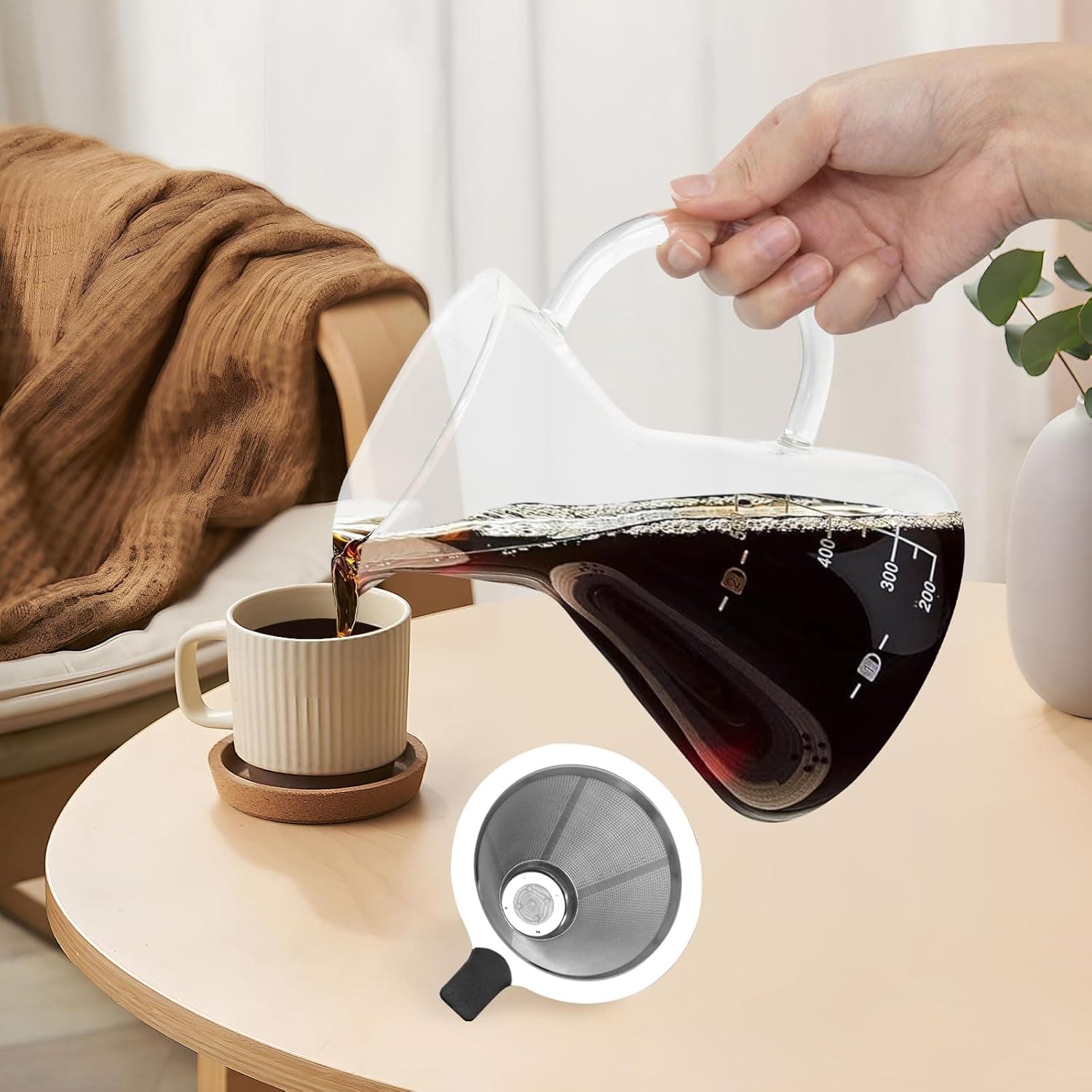
Inspect the mesh and seating before blaming normal fine-particle passage. Coarse grounds outside the filter, overflow or a torn section warrant a different response from a small amount of fine sediment. Stop using damaged parts rather than trying to hide the problem with an improvised paper liner.
Do not force one recipe onto every filter system
Brewer geometry, filter fit, grind and pouring all affect the result. Keep useful notes, but do not chase a paper recipe's drain time by grinding progressively finer without checking your mesh. If the filter slows unexpectedly, clean and inspect it before making another brewing adjustment.
Do not turn reusable into an unsupported promise
A reusable filter still requires care and can be damaged. No lifetime, cost saving, environmental ranking or health benefit has been measured for this comparison. Make the purchase decision from confirmed construction, fit and your own routine rather than advertising-style guarantees.
Plan cleaning before the next brew
With paper, remove the used filter and grounds according to its instructions and clean the dripper and server; disposable paper does not make the rest of the equipment self-cleaning. With metal, let the grounds cool enough to handle, empty them and rinse both mesh surfaces before residue dries in place.
Wash the filter and carafe using the care directions supplied with the exact brewer. The OB-40005 catalog confirms a dishwasher-safe design, but it does not provide a verified chemical soak formula. Avoid inventing vinegar concentrations, bleach treatments or abrasive cleaning methods, and do not poke a clogged mesh with a sharp tool.
CDC guidance recommends clean hands, utensils and countertops during food preparation. Apply that ordinary kitchen practice to your brewing area, rinse away cleaning residue and dry components before storage. Keep the empty filter where it will not be crushed by heavier items; inspect it again before loading the next dose.
Answer common paper-versus-metal filter questions
Are paper or metal coffee filters better for home pour over?
Neither is better for every household. Choose paper if a cleaner-textured cup is your priority, or a reusable metal filter if you prefer more body and will clean the mesh after brewing.
Why does a metal coffee filter leave some sediment in the cup?
Fine particles can pass through metal mesh, so some sediment does not automatically mean the brewer is faulty. Check for torn mesh, poor seating or overflowing grounds if you see coarse particles or an unusual change from your normal brew.
Does the OB-40005 coffee maker need paper filters?
No paper filter is required by its verified paper-free design. Model OB-40005 uses a reusable double-layer 304 stainless steel filter; add another filter only if the instructions for your exact item expressly support it.
Can any paper filter replace the supplied metal filter?
No universal replacement fit is verified for this brewer. Paper size, shape and support must match a dripper designed for that paper; do not assume that a similarly shaped cone will seat safely or brew correctly.
Is metal-filter coffee always stronger than paper-filter coffee?
A fuller texture is not proof that a cup has more caffeine or a particular extraction strength. This guide does not establish caffeine differences; record your coffee, dose, water and brewing method instead of treating filter material as a strength measurement.
How should the reusable OB-40005 filter be cleaned?
Empty cooled grounds, rinse both sides of the mesh, wash according to the supplied care instructions and let the parts dry before storage. The verified catalog lists a dishwasher-safe design, but check the exact item instructions and remove trapped grounds before washing.
Does a reusable metal filter always cost less or create less environmental impact?
This guide makes no guaranteed cost or environmental comparison. Purchase price, paper use, water, cleaning, breakage and how long the equipment remains in use would all need to be considered; reusable here describes the filter's intended use, not a measured lifecycle result.
Choose the setup you can use and maintain consistently
If a reusable-filter morning routine fits your preferences, review the Obsoorth OB-40005 details and exact Amazon listing before buying. If you want paper filtration, choose a brewer whose instructions confirm the paper it uses instead of modifying this one. Browse Coffee Accessories to check verified product formats, not assumed interchangeability.
Sources and review method
- National Coffee Association: Pour-over coffee
Explains filter-material differences, brewer geometry, medium-grind starting guidance and the controlled pour-over process.
- Hario USA: Double Mesh Metal Coffee Dripper
An original manufacturer example of paper-free mesh filtration and fine-particle passage; not a specification or compatibility claim for OB-40005.
- CHEMEX: Official FAQ
Documents model-specific paper formats and how filter placement affects airflow; its paper sizes and heating instructions do not transfer to another brewer.
- CDC: Preventing Food Poisoning
Supports the general food-preparation practice of washing hands and cleaning utensils and countertops; not a special coffee-filter treatment.
Obsoorth Editorial Team maintains product-use and selection guides by checking the published catalog, matching model imagery and original guidance. Product facts and sources were reviewed on Oct 9, 2026; this article reports no original tasting trial, filtration test or lifecycle study. General manufacturer examples do not transfer their product specifications to OB-40005.