Quick Answer
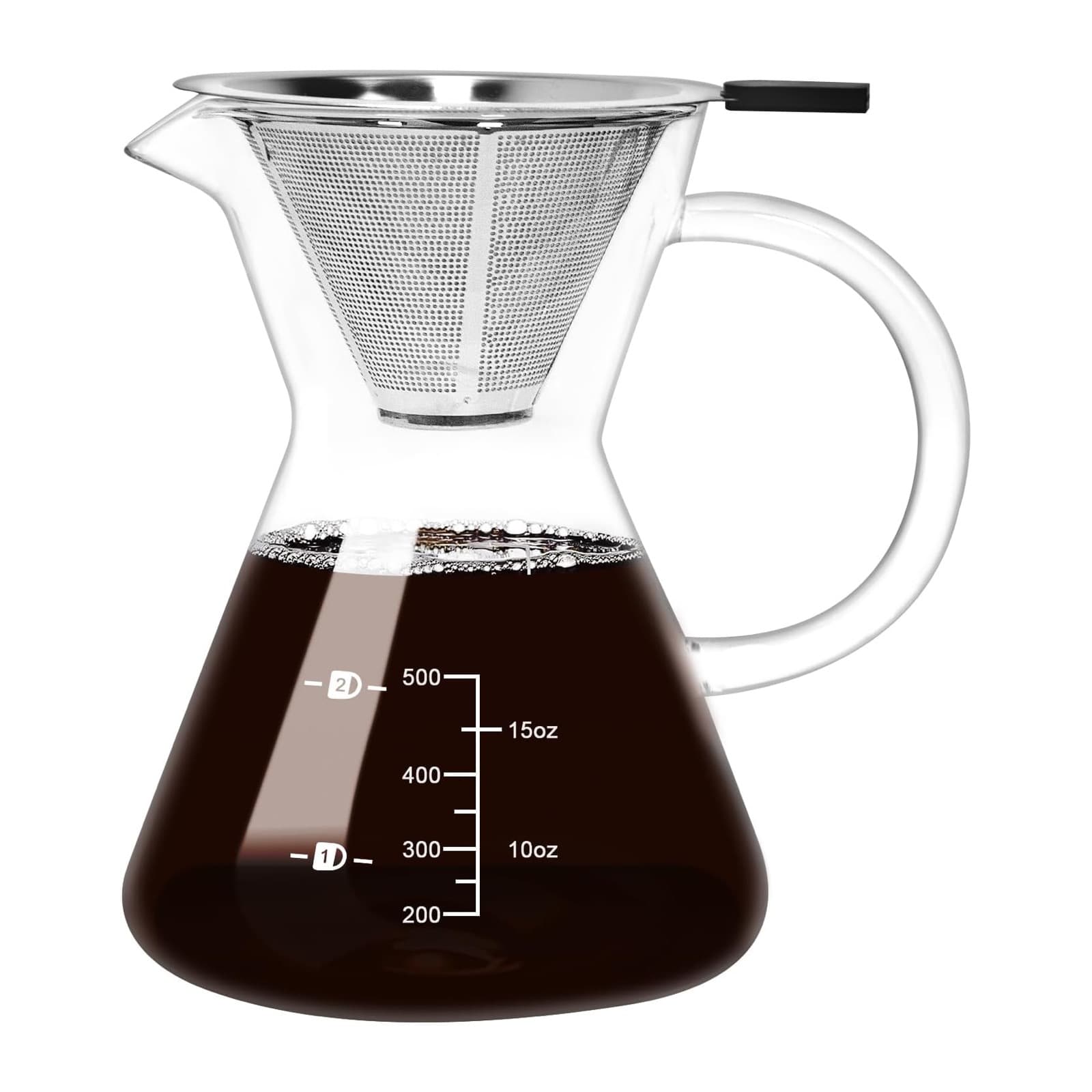
To use a pour over coffee maker with a metal filter, home coffee drinkers should measure medium-ground coffee and water, then record one starting ratio. The Obsoorth OB-40005 combines a reusable double-layer stainless steel filter with a 17 oz / 500 ml glass carafe, so the grounds go in the filter and brewed coffee collects below. Bloom for 30–45 seconds, pour the remaining water with control and remove the filter after drawdown. Let the drink cool, adjust one variable next time and wash every part after use.
Choose the right setup
Is a metal-filter pour over right for your routine?
Pour over lets you control the dose, water, temperature and pouring pattern by hand. A reusable metal filter suits people who want a paper-free routine and will rinse fine mesh after brewing. The National Coffee Association notes that metal mesh lets more oils and sediment enter the cup than paper, which can change the cup's texture.
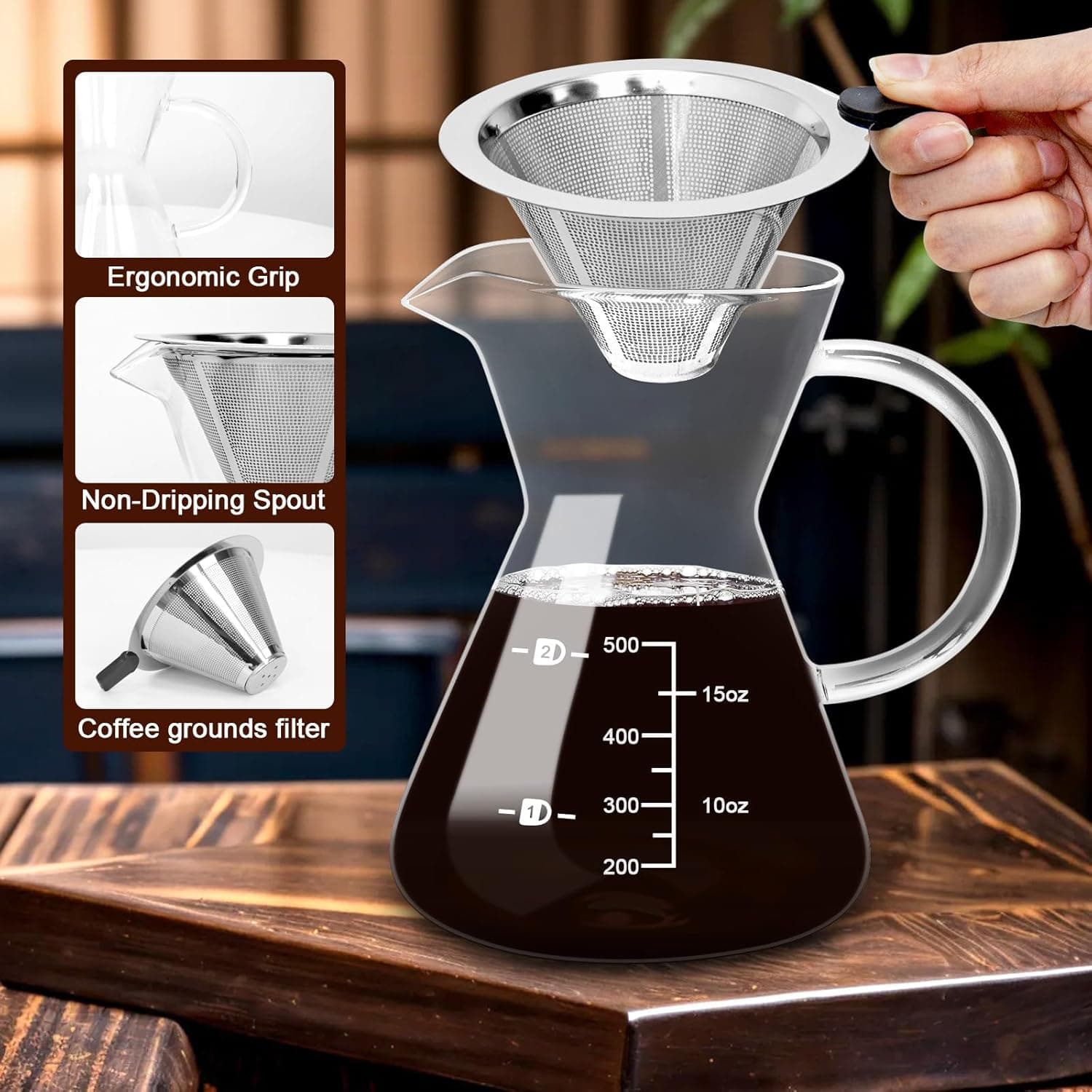
The OB-40005 is intended for this exact countertop workflow. Its verified record lists a 17 oz / 500 ml graduated borosilicate glass carafe and double-layer 304 stainless steel filter. Compare its 4.02 × 4.8 × 6.38 inch listed size with your counter and storage.
Use this method when
- You want to control dose, water and pouring by hand.
- You prefer a reusable metal filter instead of paper.
- You can set the brewer on a stable, heat-resistant surface.
- You are willing to measure, take notes and clean after each use.
Choose another method when
You need unattended brewing, prefer paper filtration, cannot safely handle a kettle or have damaged glass or filter parts. Heat water separately rather than using the carafe as a kettle.
Prepare first
Gather a kettle, scale, timer and one simple recipe
Start with clean hands, a clear counter and equipment that is cool enough to inspect. Gather the coffee maker, kettle, ground coffee, drinking water, scale, timer and a heat-safe cup. A gooseneck kettle can make flow easier to control, but any safe kettle with a manageable spout can be used carefully.
Select one ratio instead of changing coffee and water by guesswork. The National Coffee Association gives 1:13 to 1:16 as a broad pour-over starting range. Choose one ratio inside that range and a batch that fits the carafe, then use the same starting point for each comparison.
Step-by-step
Follow eight steps for a repeatable metal-filter pour over
Step 1
Inspect, wash and assemble the brewer
Set the clean, dry carafe on a level, heat-resistant surface and seat the stainless steel filter securely. Check the glass, handle, spout and mesh. Do not use the brewer if the glass is chipped, the handle is loose or the filter sits unevenly.
Step 2
Heat the brewing water in a separate kettle
Use fresh drinking water and heat it in a suitable kettle. The National Coffee Association's pour-over guide gives 93 ± 3°C as a useful starting range. The verified OB-40005 record does not provide direct-heating instructions, so keep the glass carafe off the stovetop and use a separate kettle.
Step 3
Measure coffee and water for a repeatable starting point
Place the assembled brewer on a scale, add a medium grind and record both coffee and water by weight. The National Coffee Association suggests starting around 1 gram of coffee for 13–16 grams of water. Choose a batch that stays within the carafe's listed 17 oz / 500 ml capacity, leaving practical room for the brewed coffee rather than treating the maximum marking as a required recipe.
Step 4
Level the grounds in the metal filter
Add the ground coffee to the clean reusable filter, then tap lightly so the bed is level without compressing it. A medium grind is a sensible first test, but metal-filter flow can differ from a paper-filter recipe, so keep notes and adjust after tasting.
Step 5
Bloom the coffee and wet every visible dry patch
Start the timer and pour just enough water to saturate the entire coffee bed. The National Coffee Association uses roughly twice the coffee weight for the bloom and a 30–45 second pause. Pour from the center outward with control, watch for dry pockets near the mesh and avoid flooding over the filter rim.
Step 6
Continue with slow, controlled pours
Add the remaining water in a steady stream or consistent pulses, keeping it below the top of the filter. Move across the coffee bed instead of pouring in one spot. The National Coffee Association describes 2–4 minutes of total water contact as a general starting window; use taste and the actual metal-filter drawdown to guide later changes.
Step 7
Remove the filter, serve carefully and taste
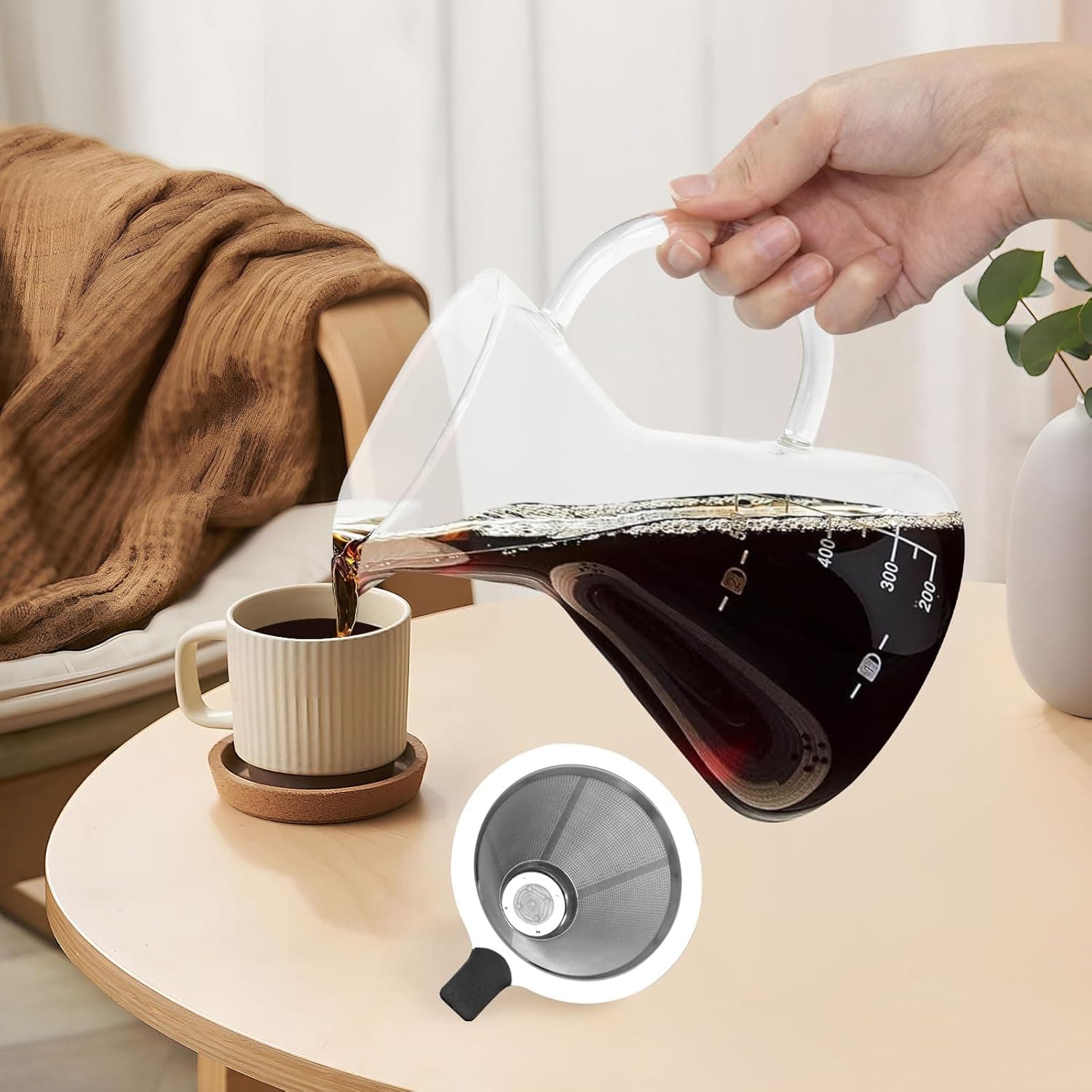
When the stream has slowed to drops, lift the filter by a safe, cool gripping point and place it in a stable sink or dish. Hold the carafe by its handle and pour through the spout. Keep hot coffee away from counter edges and let it cool before tasting.
Step 8
Discard the grounds, wash and dry every part
Empty the grounds once they are cool enough to handle, then rinse the mesh promptly so fine particles and coffee oils do not dry in place. Wash the filter, carafe and serving cup after each use according to the supplied care instructions. The verified product record lists a dishwasher-safe design, but a prompt rinse and a careful mesh check still help prevent trapped grounds before storage.
Dial in the next brew
How should you adjust a pour over that misses the mark?
Let the coffee cool enough to taste, then record the dose, water, grind, drawdown and what you notice. Change only one factor on the next brew so the effect is easier to understand.
If the cup is weak and the water ran through quickly
Confirm that the scale and ratio were correct, then test a slightly finer grind while keeping the dose, water and pour pattern the same. Do not compensate by filling above the filter rim.
If drawdown stalls or the taste is harsher than you prefer
Inspect the mesh for residue. If it is clean, test a slightly coarser grind next time while keeping the ratio stable.
Troubleshooting
Avoid four common metal-filter pour over mistakes
Skipping measurement
Record coffee and water by weight so the next adjustment has a reliable baseline.
Leaving dry patches during bloom
Pour slowly across the whole bed and pause long enough for visible bubbling to settle.
Filling to the filter rim
Keep water comfortably below the top so grounds and hot liquid do not overflow.
Heating the carafe directly
Use a separate kettle because the verified record does not provide direct-stovetop instructions.
After brewing
Clean the filter before oils and fine grounds collect
The National Coffee Association recommends hot, soapy water after each use so grounds and coffee oils do not accumulate. Let the brewer cool, empty the grounds, rinse both sides of the mesh and wash the glass, handle area, spout and filter according to the supplied instructions.
The verified OB-40005 record lists a dishwasher-safe design, but remove grounds first and follow the supplied care information. Dry every part before storage, keep heavier cookware away from the glass and inspect the brewer before reuse.
Product match
Review the exact OB-40005 brewer before choosing
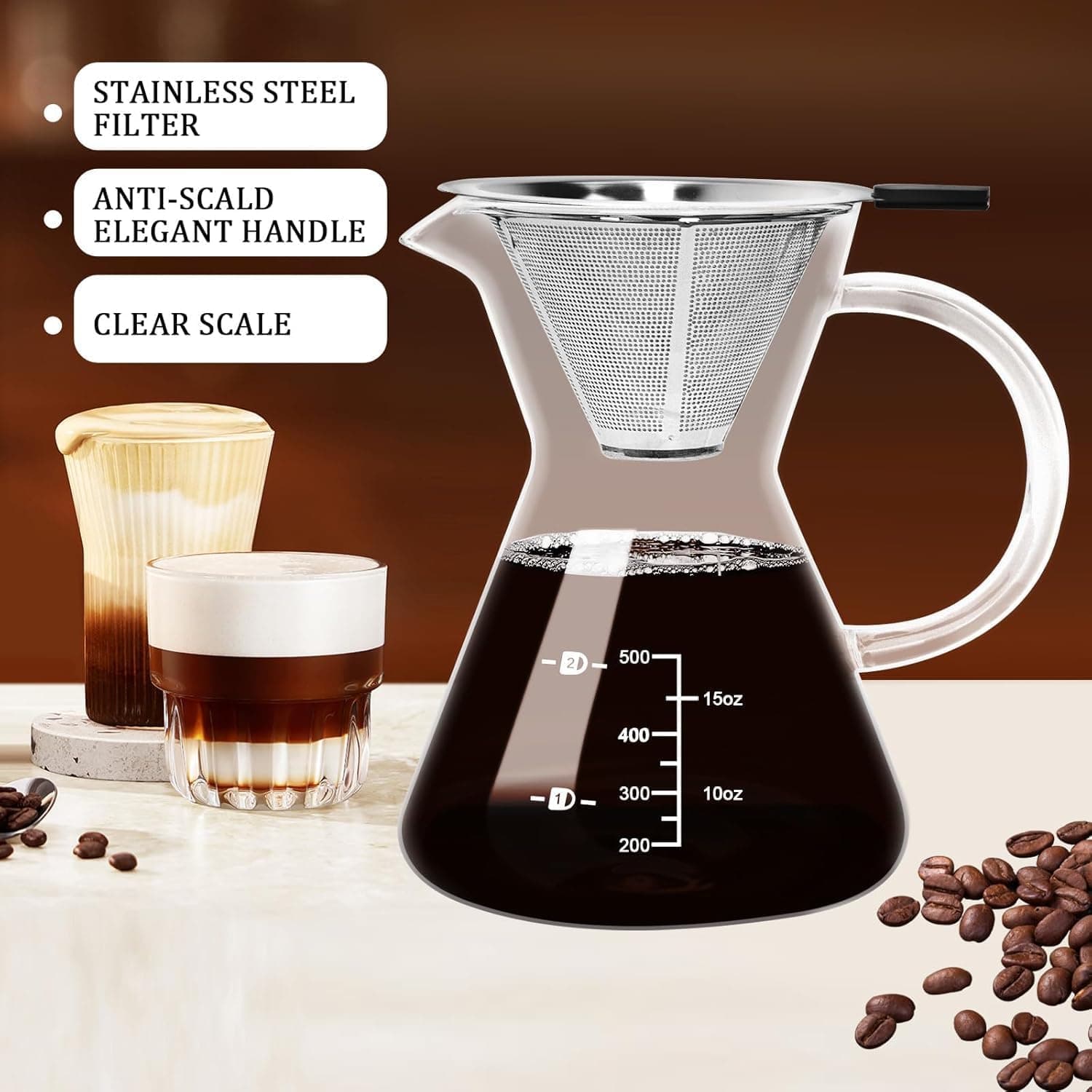
The Obsoorth 17 oz glass pour over coffee maker is model OB-40005, with a 500 ml graduated borosilicate glass carafe and reusable double-layer 304 stainless steel filter. Check the verified dimensions, images and care claims against your own routine. You can also browse the Coffee Accessories collection or read the Small Kitchen Upgrades guide for related counter-space planning ideas.
Frequently asked questions
Metal-filter pour over coffee, answered
How do you use a pour over coffee maker with a metal filter?
Put the clean metal filter in the carafe, add measured medium-ground coffee and bloom it until all grounds are wet. Continue with a slow, controlled pour, remove the filter when drawdown finishes, then wash the mesh and carafe after serving.
What coffee-to-water ratio should a beginner use for pour over?
The National Coffee Association suggests a starting range of 1 gram of coffee for 13–16 grams of water. Pick one ratio inside that range, record it and change only one variable at a time after tasting.
What grind size works with a reusable metal coffee filter?
Start with a medium grind, which is the general pour-over recommendation in the National Coffee Association guide. If water races through and the cup tastes weak, test slightly finer; if it stalls or tastes harsher than you prefer, test slightly coarser while keeping the dose and pour consistent.
Do you need a paper filter inside the OB-40005 metal filter?
The verified OB-40005 record describes a reusable double-layer stainless steel filter and a paper-free brewing routine. Use that filter as designed unless the instructions supplied with your exact brewer specify an additional filter.
Why does my pour over drain too quickly or too slowly?
Grind size, coffee dose, pouring rate and trapped residue can all change drawdown. Clean the mesh first, then adjust one variable per brew so you can tell which change affected the result.
Can the OB-40005 glass carafe go directly on a stovetop?
The current verified product record calls the carafe heat-resistant borosilicate glass but does not give direct-stovetop instructions. Heat water in a separate kettle and do not place the carafe on a burner unless the instructions supplied with your exact item expressly allow it.
Is the OB-40005 pour over coffee maker dishwasher safe?
The verified catalog record lists a dishwasher-safe design. Check the care information supplied with your exact item, remove grounds first and inspect the fine mesh after washing so no particles remain trapped.
What are the size, materials and ASIN of this coffee maker?
Model OB-40005 is listed at 4.02 inches deep by 4.8 inches wide by 6.38 inches high, with a 17 oz / 500 ml capacity. Its verified materials are borosilicate glass and 304 stainless steel, and its Amazon ASIN is B0DQGQDYPW.
Sources and review method
Check the guidance behind this article
Product facts come from the verified OB-40005 catalog record, upload-state mapping and matching product images. General brewing, measuring, hot-water handling and cleaning guidance was checked against these sources on Sep 16, 2026.
1. National Coffee Association: Pour-over Coffee
Consumer guidance on pour-over equipment, medium grind, metal filters, starting ratios, bloom, contact time and cleaning after each use.
2. Texas A&M AgriLife Center for Coffee Research and Education: How to Make the Perfect Cup
University guidance on filtered water, approximately 200°F brewing water and the value of a repeatable coffee-to-water ratio.
3. CDC: Preventing Food Poisoning
Federal guidance to wash hands and clean utensils and countertops with hot, soapy water during food and drink preparation.
About the author
Obsoorth Editorial Team
The editorial team prepares product-use guidance from verified catalog records, matching product assets and cited external references. The team separates general brewing guidance from claims about a specific model and removes unsupported specifications.